The components of the technology acceptance model refer to the dependent, independent, moderator, and mediator variables of TAM theories. Understanding the components of the technology acceptance model is crucial for students, researchers, and HR professionals. It helps professionals understand why people adopt and use the new systems. The researchers adopt the technology acceptance model questionnaire to conduct new research in different fields. The components of the technology acceptance model help top management understand user behavior towards new systems, AI, Gemini AI, and ChatGPT in organizations. They predict acceptance rates and set the implementation strategy, addressing perceived usefulness and ease of use elements of the TAM model.
List of Contents
This article explains the components of the technology acceptance model (TAM) from 1986 to 2008. Based on the literature review, many articles describe the elements of the technology acceptance model (TAM) published in 1989; however, this article presents the components of the TAM model as published in 1986, 1989, 1993, 1996, 2000, and 2008.
components of the TAM model as published in 1986, 1989, 1993, 1996, 2000, and 2008.
Components of TAM Model-1, 2, & 3 at a Glance
| TAM Model | Authors | Establish Year | Variables |
|---|---|---|---|
| Technology Acceptance Model (TAM) | Fred D. Davis | 1986 | Perceived Usefulness, Perceived Ease of Use, and Attitude toward using the system. (Feature: X1, X2, and X3) |
| Technology Acceptance Model (TAM) | Fred D. Davis | 1989 |
Perceived Usefulness, Perceived Ease of Use, Attitude toward Use, Behavioral Intention. (External Variables) |
| Technology Acceptance Model (TAM) | Fred D. Davis | 1993 |
Perceived Usefulness, Perceived Ease of Use, Attitude Toward Using, Actual Usage Behavior. (System Design Features) |
| Technology Acceptance Model (TAM-1) | Venkatesh and Davis | 1996 | Perceived Usefulness, Perceived Ease of Use, User Behavioral Intention (External Variables). |
| Extended Technology Acceptance Model (TAM 2) or ETAM | Venkatesh and Davis | 2000 | Perceived Usefulness, Perceived Ease of Use, Intention to Use, Use Behavior, and (Subjective Norm, Voluntariness, Image, Job Relevance, Output Quality, Result Demonstrability, Experience, and Voluntariness) |
| The Technology Acceptance Model (TAM-3) | Venkatesh & Bala | 2008 | Perceived Usefulness, Perceived Ease of Use, Behavioral Intention, Use behavior, and (Subjective Norm, Voluntariness, Image, Job relevance, Output Quality, Result Demonstrability, Experience, Voluntariness, Computer Self-Efficacy, Perception of External Control, Computer Anxiety, Computer Playfulness, Perceived Enjoyment, Objective Usability) |
These components of the technology acceptance model have evolved in diverse fields of study over the years.
Components of the Technology Acceptance Model (TAM-1986)
Initially, in 1986, Fred D. Davis included three elements: perceived usefulness, perceived ease of use, and attitude toward use. According to the technology acceptance model (Davis, 1986), the components of the technology acceptance model are:
- Perceived Usefulness
- Perceived Ease of Use
- Attitude toward using the system
However, Fred D. Davis introduces external variables Design Feature: X1, X2, and X3 in the technology acceptance model.
Perceived Usefulness
Perceived Usefulness refers to the extent to which a person believes that using a particular system will enhance their job performance (Davis, 1986). It is a measurement factor that assesses how it influences users’ decisions to accept or reject the new system in the workplace. It is an outcome of the anticipated effect on productivity using the new system. For example, using ChatGPT enhances creating images to promote products on social media platforms. It is the most significant element of the technology acceptance model, as it measures people’s beliefs.
Perceived Ease of Use
Perceived ease of use is the degree to which a person believes that utilizing a certain system would be free of mental and physical pressure (Davis, 1986). It is the most significant construct to demonstrate a person’s belief in using the new system. PEOU identifies the user’s perception that the new system will require no or less effort. The user adopts and utilizes the new system when the PEOU is higher. For example, Gemini AI reduces employee workloads, enhancing content creation for product marketing. Perceived ease of use is another crucial component of the technology acceptance model.
Attitude Toward Use
Attitude toward using is a crucial explicit mediator variable in the TAM model that directly affects actual system use. ATU is a person’s emotional response to whether they accept the new system. According to the TAM model, perceived usefulness and perceived ease of use affect attitude toward use and actual use behavior (Davis, 1986).
Design Feature (External Variable)
Design features are external variables in the TAM model that positively affect two core cognitive beliefs: perceived usefulness and ease of use; however, they do not impact attitude or behavioral intention. They are external stimuli such as attributes, interface components, and technical capabilities of the new system. The researchers indicate these features, such as X₁, X₂, and X₃.
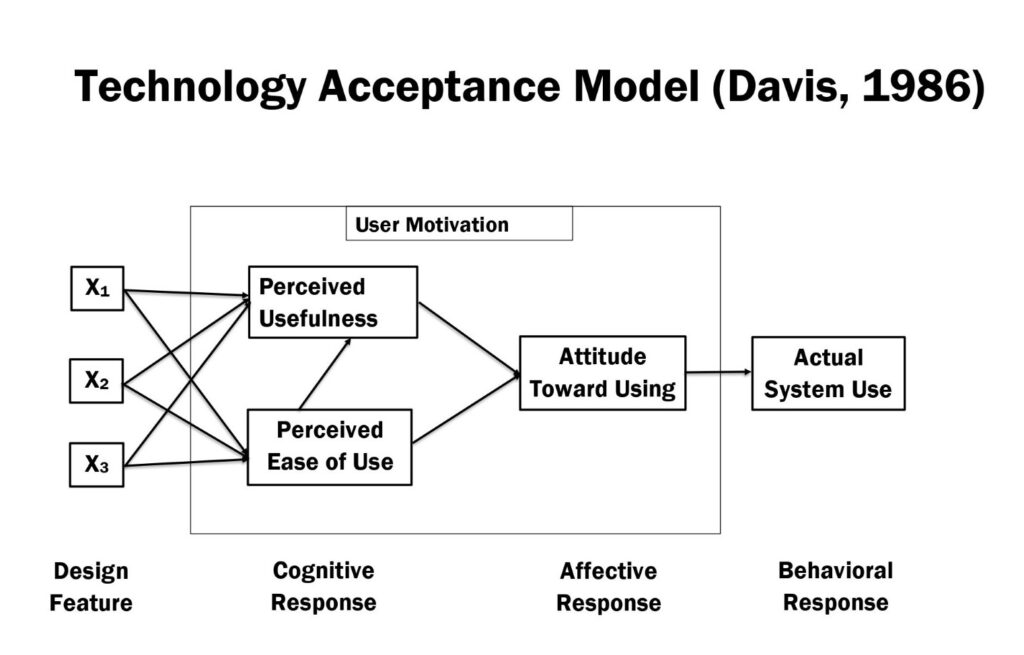
TAM Model (Davis, 1986)
Fred D. Davis is the pioneer of the technology acceptance model. He is a professor at the University of Michigan School of Business Administration. His research interests include user acceptance of technology, technology support for decision-making, and motivational factors in computer acceptance.
Research Title: A technology acceptance model for empirically testing new end-user information systems: Theory and results
Author and Published Year: Fred D. Davis (Fred Donald Davis)- 1986
Publisher: Massachusetts Institute of Technology (MIT), Sloan School of Management
Components of the Technology Acceptance Model (Davis, 1989)
The components of the Technology acceptance model (Davis, 1989) are: external variables, perceived usefulness, perceived ease of use, attitude towards use, behavioral intention, and actual system use.
The six core elements of the TAM model ( Davis, 1989) are:
1. External Variables (EV) (Belief): Factors that influence the adoption of a new system, such as implementation strategy, context, and training methods.
2. Perceived Usefulness (PU): The measurement of a person’s belief in using the new system to enhance productivity in the workplace. It is commonly believed that adopting new technology helps to improve performance.
3. Perceived Ease of Use (PEOU): It is the degree to which a person assumes that the new system helps to complete tasks smoothly without hassle.
4. Attitude Toward Use (ATU): It is an overall affective response of users that the new system is good for us. It is a core variable to determine the user’s emotional reaction to whether to accept or reject the new system. It affects people’s contemporary psychology and actions.
5. Behavioral Intention (BI): It is a crucial component of the technology acceptance model that indicates the user has decided to use the new system in the workplace. It prompts users to implement the new system in both personal and professional contexts.
6. Actual System Use (ASU): It is a dependable variable in the technology acceptance model that refers to the degree to which users accept the new system and apply it in real-life activities. It measures how the new system works when people use it to complete regular tasks.
Difference Between the TAM 1986 and TAM 1989
According to the technology acceptance model (Davis, 1989), Perceived Usefulness (PU) directly influences the user’s Behavioral Intention to accept and use the new system. PU bypasses the Attitude Toward Use entirely and positively affects BI.
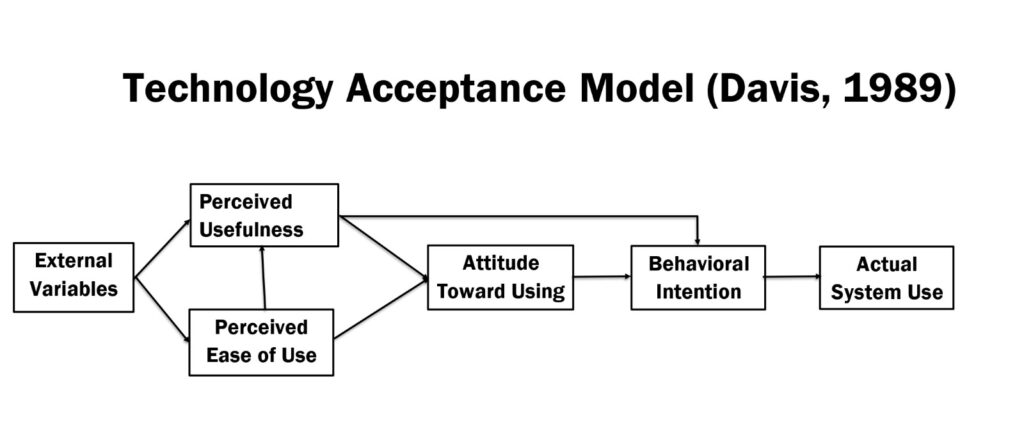
TAM Model (Davis, 1989)
Research Title: Perceived Usefulness, Perceived Ease of Use, and User Acceptance of Information Technology
Author and Published Year: Fred D. Davis- 1989
Publisher: Management Information Systems Research Center (MISRC), University of Minnesota (via the journal MIS Quarterly)
Components of the Technology Acceptance Model (TAM) (Davis et al., 1989)
The components of the technology acceptance model (Davis et al., 1989) are:
- External Variables (EV) (Belief)
- Perceived Usefulness (PU)
- Perceived Ease of Use (PEOU)
- Attitude Toward Use (ATU)
- Behavioral Intention (BI)
- Actual System Use (ASU)
According to the technology acceptance model (Davis et al., 1989), its components explain why users accept new computer technology. It also helps explain user behavior towards the adoption of new computer technology.
The Technology Acceptance Model (TAM) explains users’ intention to adopt technology through three variables: perceived usefulness, perceived ease of use, and attitude toward use.
Technology Acceptance Model (TAM) (Davis et al., 1989)
In 1989, Fred D. Davis, Richard P. Bagozzi, and Paul R. Warshaw presented the technology acceptance model in the research paper “User Acceptance of Computer Technology: A Comparison of Two Theoretical Models,” published by the Institute for Operations Research and the Management Sciences (INFORMS) located in Maryland, USA. The TAM model was derived from the Theory of Reasoned Action (TRA), which describes the factors that stimulate people to change their behavior.
- Research Title: User Acceptance of Computer Technology: A Comparison of Two Theoretical Models.
- Author & Published Year: Fred D. Davis, Richard P. Bagozzi, and Paul R. Warshaw in 1989.
- Publisher: INFORMS
Components of the Technology Acceptance Model (TAM) (Davis, 1993)
The five components of the technology acceptance model (Davis, 1993) are:
- System Design Features:
- Perceived Usefulness
- Perceived Ease of Use
- Attitude Toward Using
- Actual Usage Behavior
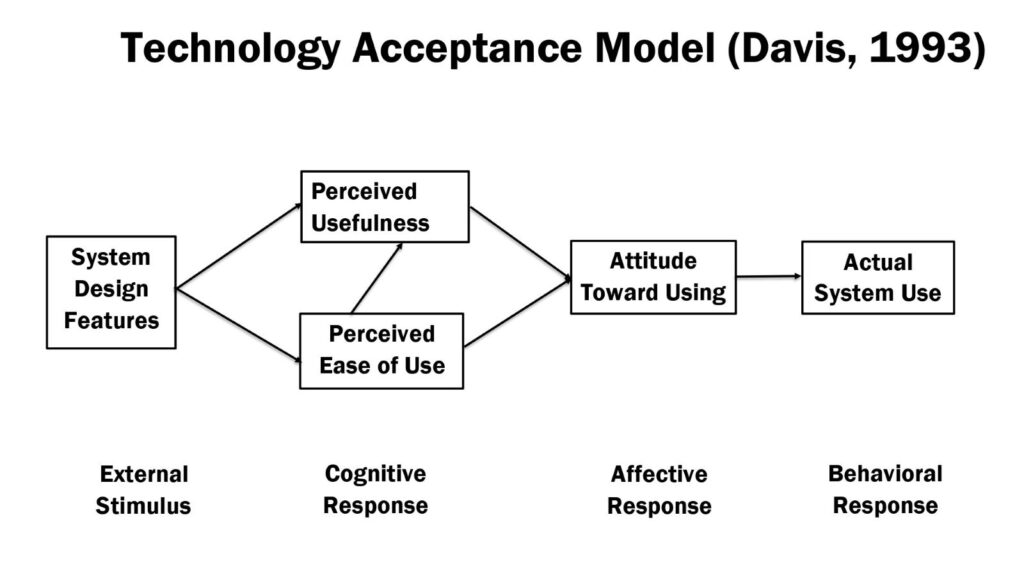
TAM Model (Davis, 1993)
- Research Title: User Acceptance of Information Technology: System Characteristics, User Perceptions, and Behavioral Impacts.
- Author & Published Year: Fres D Davis- 1993
- Publisher: University of Michigan, Business School, Ann Arbor, M1 48109, USA.
Components of the Technology Acceptance Model (TAM-1): Venkatesh and Davis, 1996
Variables: Perceived Usefulness, Ease of Use, User’s Behavioral Intention, and (External Variables)
External variables: Computer self-efficacy and Objective Usability
However, in 1996, Viswanath Venkatesh and Fred D. Davis included the variable “Attitude toward Using” in the previous model and outlined the final version of the Technology Acceptance Model.
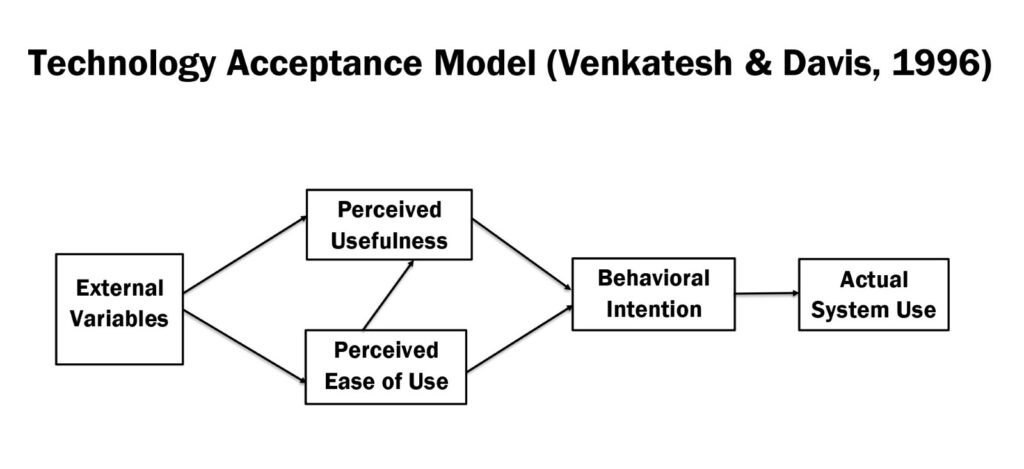
TAM Model (Venkatesh and Davis, 1996)
Research Title: A Model of the Antecedents of Perceived Ease of Use: Development and Test
Authors and Published Year: Viswanath Venkatesh and Fred D. Davis- 1996
Publisher: Wiley (on behalf of the Decision Sciences Institute via the journal Decision Sciences)
Technology Acceptance Model (TAM-2) Components
The components of the technology acceptance model (Venkatesh and Davis, 2000) are:
- Perceived Usefulness
- Perceived Ease of Use
- Intention to Use
- Use Behavior
- (Subjective Norm, Voluntariness, Image, Job relevance, Output Quality, Result Demonstrability, Experience, and Voluntariness)
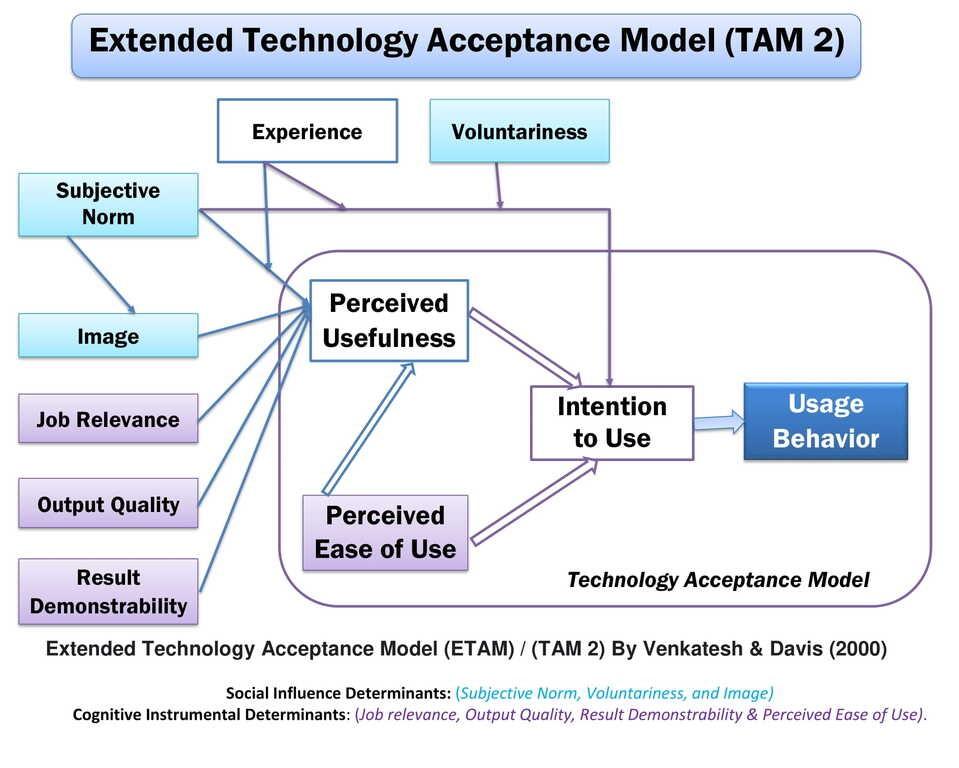
TAM 2 Model Elements
Subjective Norm (SN): It is a crucial component of the technology acceptance model that directly affects perceived usefulness and indirectly affects it through another construct, Image. SN is the social influence of people close to them. This variable determines how your close people influence you, depending on their acceptance and use of the new system and technology.
Image (IMG): Image is a social pressure construct that influences people to adopt a new system to improve their status within an organization or society.
Job Relevance (JR): It is another key construct of PU that influences people to use the new system to complete a specific job in the organization. It is the degree to which people believe the technology is an ideal tool for completing their jobs.
Output Quality (OQ): It is a cognitive instrumental process that determines how well the new technology accomplishes the specific tasks required for the job.
Result Demonstrability (RD): It is a core cognitive instrument that identifies the tangible significance of the new system in performance.
Experience: It represents how experience affects the ability to accept and navigate new technology. Users rely on subjective norms when they have little experience, and, as their experience grows, they evaluate the new system based on skills rather than peer pressure.
Voluntariness of Use: It indicates whether use of the new system in the workplace is compulsory or discretionary. Social influence has a stronger positive impact on acceptance of the new system when it is mandatory.
TAM 2 Model Published Paper Details
TAM originated with Venkatesh and Davis in 2000, building on earlier work. Instead of just one idea, it added more reasons people find tech useful – like peer pressure or practical benefits. This version shows how factors such as coworkers’ perceptions, job fit, quality of results, and clear outcomes shape whether someone uses a system.
Research Title: A Theoretical Extension of the Technology Acceptance Model: Four Longitudinal Field Studies
Authors and Published Year: Viswanath Venkatesh and Fred D. Davis- 2000
Publisher: Institute for Operations Research and the Management Sciences (INFORMS), via the journal Management Science
Components of the Technology Acceptance Model (TAM-3)
The components of the technology acceptance model (Venkatesh and Bala, 2008) are:
- Perceived Usefulness
- Perceived Ease of Use
- Behavioral Intention
- Use behavior
- (Subjective Norm, Voluntariness, Image, Job relevance, Output Quality, Result Demonstrability, Experience, Voluntariness, Computer Self- Efficacy, Perception of External Control, Computer Anxiety, Computer Playfulness, Perceived Enjoyment, Objective Usability)
TAM- 3 Model Elements
Computer Self‑Efficacy (CSE): CSE is the primary anchor construct of perceived ease of use (PEOU), representing the user’s ability and confidence in using the new system. It shows how confident people feel in using the new technology to complete a specific task in the workplace.
Perception of External Control (PEC): It is another crucial determinant of PEOU, representing the user’s belief that the organization will provide support, such as technical support and training to use the new system.
Computer Anxiety (CA): CA is an adverse feeling that hinders a user’s acceptance and use of a new system in the workplace. CA is an emotional barrier to adopting new technology.
Computer Playfulness (CP): It is an anchoring factor that enhances people’s primary willingness to accept and interact with the new system.
Perceived Enjoyment (PE): It is an adjustment construct in the technology acceptance model (TAM-3) that influences behavioral intention through perceived ease of use. Perceived enjoyment reflects users’ fun and experience when adopting and interacting with the new system in the workplace.
Objective Usability (OU): It is another adjustment construct that directly affects perceived ease of use to influence behavioral intention to use the new system. Objective Usability refers to data on how easily people can navigate the system to obtain precise results.
The author explains other variables (Subjective Norm, Voluntariness, Image, Job relevance, Output Quality, Result Demonstrability, Experience, and Voluntariness) in the component of the technology acceptance model TAM-2 section in this article.
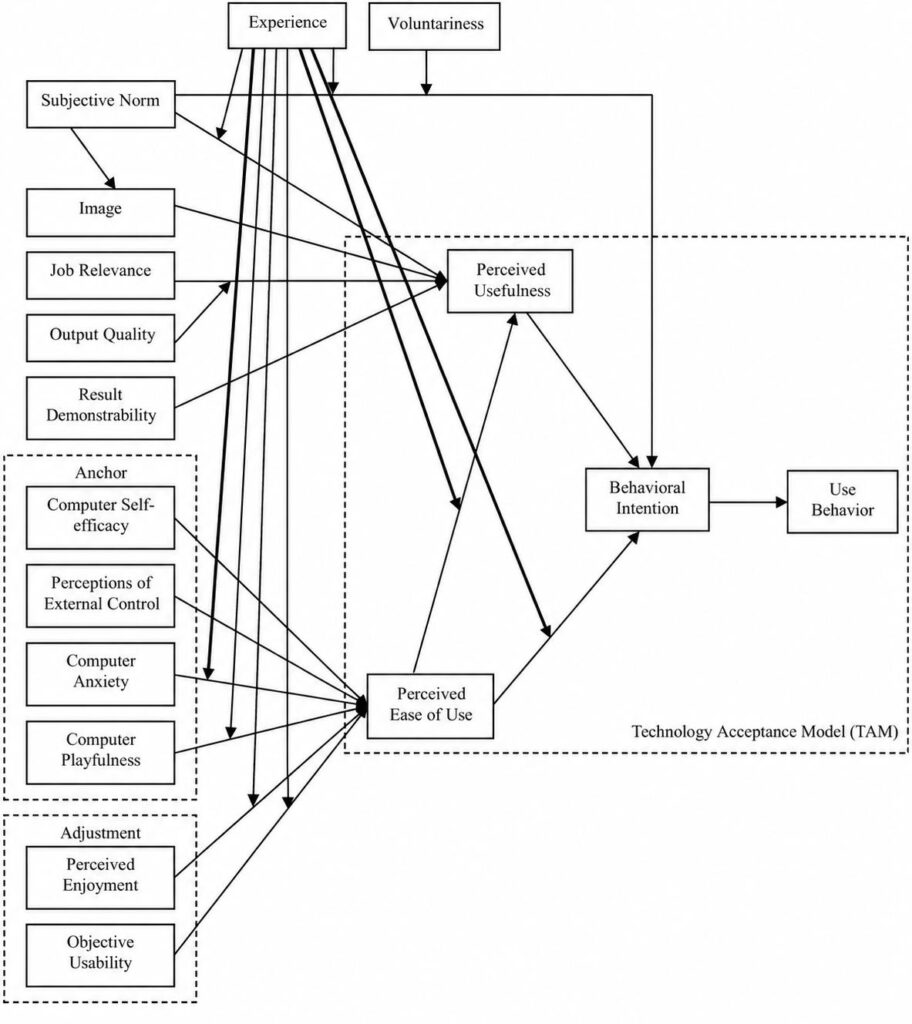
TAM 3 Model Publishing Paper Details
The Technology Acceptance Model (TAM3) was introduced by Venkatesh and Bala in 2008. TAM-3 provides valuable rational explanations of how and why individuals decide to adopt and use ITs, particularly the work on the determinants of perceived usefulness and perceived ease of use.
Research Title: Technology Acceptance Model 3 and a Research Agenda on Interventions
Authors and Published Year: Viswanath Venkatesh and Hillol Bala in 2008
Publisher: Decision Sciences Journal.
Edited by: Nagesh Murthy, University of Oregon; Liangfei Qiu, University of Florida
Conclusion: Components of TAM models
In conclusion, the key elements of the technology acceptance models are perceived usefulness and perceived ease of use, which influence attitudes towards using the new system. Understanding the core components of the technology acceptance model conveys significant insight into how organizations and policymakers adopt new systems. TAM is the most cited and accepted theory for understanding technological innovation and its application in organizations. Therefore, technology acceptance models make both theoretical and practical contributions across personal, social, and professional contexts.
FAQ (Frequently Asked Questions): Components of the Technology Acceptance Model
Q: What are the core components of the technology acceptance model?
A: The three key components of the technology acceptance model are Perceived Usefulness, Perceived Ease of Use, and Attitude toward using the new system.
Q: Who is the pioneer of the technology acceptance model (TAM)?
A: Fred D. Davis is the pioneer author of the TAM model.
Q: What is the original and final technology acceptance model?
Fred D. Davis introduced the final technology acceptance model in 1989, comprising six elements: external variables, perceived usefulness, perceived ease of use, attitude towards use, behavioral intention, and actual system use.
What is the most cited model in the field of information and communication technology?
TAM has been designated as the most-cited model in the field of information and communication technology (ICT).
What is the most significant theory to adopt for Artificial Intelligence AI adoption?
The technology acceptance model (TAM) is one of the most significant models of AI adoption.
References APA 7th Edition: Scholarly Sources
Davis, F. D. (1986). A technology acceptance model for empirically testing new end-user information systems: Theory and results (Doctoral dissertation, Massachusetts Institute of Technology, Sloan School of Management). Massachusetts Institute of Technology.
Davis, F. D. (1989). Perceived usefulness, perceived ease of use, and user acceptance of information technology. MIS Quarterly, 13(3), 319–340. https://doi.org/10.2307/249008
Davis, F. D. (1993). User acceptance of information technology: System characteristics, user perceptions, and behavioral impacts. International Journal of Man-Machine Studies, 38(3), 475–487. https://doi.org/10.1006/imms.1993.1022
Davis, F. D., & Venkatesh, V. (1996). A critical assessment of potential measurement biases in the Technology Acceptance Model: Three experiments. International Journal of Human-Computer Studies, 45(1), 19–45. https://doi.org/10.1006/ijhc.1996.0040
Venkatesh, V., & Bala, H. (2008). Technology acceptance model 3 and a research agenda on interventions. Decision Sciences, 39(2), 273-315.

M M Kobiruzzaman is a researcher, academic content writer, traveler, and the founding editor of Newsmoor.com. Specializing in communication, management, technology adoption models, and frameworks analysis, and journalism, his work bridges the gap between theory explanation and cultural communication. With a strong background in communication and management, he is dedicated to providing authoritative guides that elevate business and media literacy and academic writing standards.
"." Newsmoor,
