Hardball Tactics in Negotiation, Definition & Examples. This article explains the top 8 Hardball Tactics in Negotiation: Good cop, bad cop, Lowball Highball, Bogey, Nibble, Chicken, Intimidation, Aggressive behavior, and Snow Job.
Hardball Tactics
Hardball Tactics refer to the typical method applied by negotiators to achieve a goal anyhow. Any part of the negotiation can use hardball tactics to gain an advantage. Hardball tactics are a deceptive way to gain the objective in business deals. The negotiator usually employs these tactics to benefit from another party’s detriment. People use these hardball tactics for personal, social, political, and business purposes. They adopt them to purchase a product, make an agreement, and deal with other parties. It is a significant strategy in the business communication process.
Hardball tactics in negotiation are arguably not ethical practices for dealing with other parties. Many scholars term them unethical and tricky ways to achieve advantages.
The Most Common Hardball Tactics

What are the hardball tactics in negotiation?
The 8 Hardball Tactics in Negotiation are:
- Good cop/bad cop
- Lowball/Highball
- Bogey
- The nibble
- Chicken
- Intimidation
- Aggressive Behaviour
- Snow Job
1. Good Cop Bad Cop Tactic
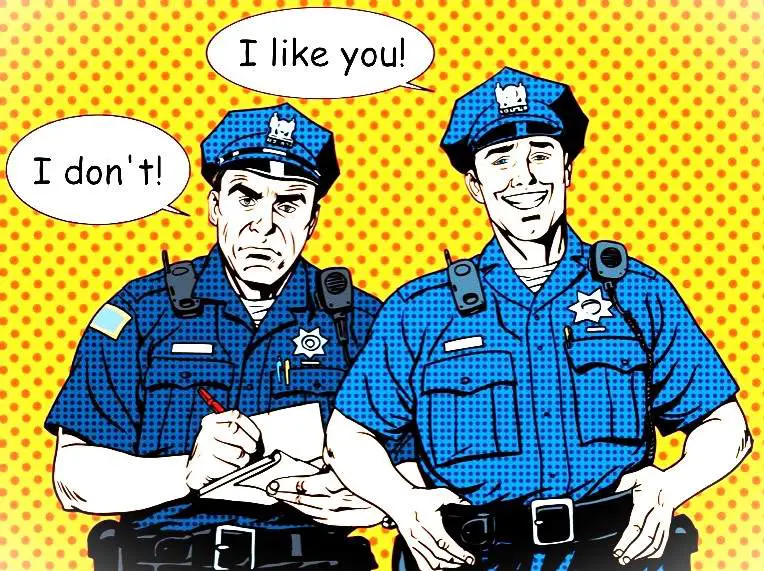
A good cop/ bad cop negotiation refers to tactical bargaining between two parties to benefit from the other party’s detriment. It occurs amid two parties’ negotiation when two people in the same party deal with the other party as good and bad.
Good Cop Bad Cop Tactic Example -1
For example, the police want to ask questions at a police station, but the prisoner would not want to say anything. So, two police officers plan to play a game, and one acts like a rude, devilish person so that he can ask the question fiercely. On the other hand, another police officer interrogates the prisoner politely. Finally, the prisoner shared all the information with them.
Good Cop Bad Cop Tactic Example -2
For example, A customer goes to a mask shop where the shop owner and his manager sell products. The customer wanted to buy a mask, so he negotiated with them. The shop owner is persuading the customer, saying that the facemask will protect them from dust. You can buy at RM 5 per piece.
On the other hand, the manager says to the customer that you have to pay RM 5 if you want to buy, or you can leave. The manager also says that you can go now, we want to close the shop.
However, the owner is still trying to persuade the customer to buy the mask for RM 5. The owner is dealing in a friendly manner, whereas the manager threatens the customer. However, both the owner & manager) want to sell the product. This kind of negotiation is called a good cop/bad cop negotiation.
Good Cop Bad Cop Tactic Example -3
When I was a secondary student, I violated the school rules by being late to school. The school discipline teacher acted as the “Bad Cop” who commanded me to be punished according to the school rules and regulations. Meanwhile, the counseling teacher held an open-minded talk to understand why I was late and advised me patiently. Finally, I will never be late again in the next five years.
2. Lowball Highball Tactic
The negotiator applies a lowball/highball tactic to get the other party’s attention. They know that they will not be able to achieve it, but they offer. The lowball/highball tactic begins with an extremely low or high opening offer to the opposite party. The extreme proposal will stimulate the other party to re-evaluate their opening offer and move closer to or beyond their resistance point.
Lowball Highball Tactic in Negotiation Example-1
For example, your son does not want to go to school by bus because his friends come by private vehicle. Therefore, he decided not to go to school till buying a private car. You offer to gift a new personal car by next month to make him happy. You know very well that you will not be able to buy a new private car by next month. It is a ridiculous offer that is called a lowball/highball tactic. Later, you manage to persuade him to go to school by bus for six more months, but you will buy a motorbike for him after six months.
Lowball Highball Tactic in Negotiation Example-2
For example, imagine that you want to buy a wooden chair. They negotiate with the seller, and the set price is 100RM; you might think it is unacceptable, so you say Can I buy it for 20 RM, because it does not seem that high? The seller might be shocked for a while, and after that, the seller might say,” 50RM, take it, okay?” Finally, your goal has been achieved.
Lowball Highball Tactic in Negotiation Example-3
For example, my girlfriend stopped talking to me because another girl liked my photos uploaded on Facebook. ELA is jealous of girls who like and comment on my Facebook photos. I told him not to use Facebook anymore to continue our communication. She also knows that it is quite impossible to stop using Facebook. However, this tactic stimulates her to talk to me for bargaining. We argued for an hour to finally agree that I would block the girl from following me on Facebook. Finally, I managed to think that blocking is so much better when it is a bad idea to stop using Facebook due to the girl.
3. Bogey Tactic
Bogey tactics in negotiation are demonstrated when negotiators conceal their interest in front of the other party. Negotiators pretend that the issue is of very little importance to them, while the opposite party is offering. The issue is significant for them, but they do not want to show their interest in front of the opposing party.
Bogey Negotiation Example-1
For example, you want to buy a new Samsung mobile phone with a face lock feature. Now, the shop owner shows you the latest Samsung mobile phone and indicates the new feature. You will be glad to see the new feature on the phone. However, you are not showing interest in the face lock feature. You are concealing your interest in front of the shop owner. You think that the shop owners can increase the price if you show more interest in the new feature. Therefore, you pretend you are not interested in buying this new phone. Eventually, you buy a low-priced phone with the new face-lock feature.
Bogey Negotiation Example-2
This tactic is usually applied to the gambling situation. When I play mahjong with my family members, I maintain my poker face even though the mahjong I drew is good, and I win the game. But, I stay calm to distract my opponents’ attention, not to sense my happiness. After that, I pretend that I want mahjong A, but my target is mahjong J. Then, I successfully won the game by misleading the other family members to discover my true intention.
4. Nibble Tactic
The nibble tactic refers to asking for a minor concession to make the deal final. Usually, negotiators use this tactic after a long time of negotiation between them. The negotiator needs to add a small item to complete the deal or agreement. Many organizations utilize the nibble tactic to motivate the sales team to achieve targets. Production company launches a new product and adds it to other items.
Nibble Negotiation Example-1
For example, the customer will purchase a secondhand iPhone if the seller provides headphones and a charger at the same price. It happens at the end of the negotiation when any party wants to close the deal.
Nibble Negotiation Example-2
For example, the tenant will rent the house if the owner replaces the old refrigerator with a new one. Finally, the owner agrees to add a new refrigerator to complete the agreement.
5. Chicken Tactic
In a negotiation tactic, the negotiator uses a big bluff with a frightening action to force the other party to fulfill their demands. The negotiator forces another party to close the deal immediately. The party shows multiple options to influence the opposite party to close the deal.
Chicken Negotiation Example-1
For example, one party is threatening the other party with, “If you do not sell this phone at RM 1000, I will buy the same phone from the next shop that is interested in selling it at the same price. The owner believed the customer’s bluff and agreed to sell the phone at RM 1000.
Chicken Negotiation Example-2
For example, the customer said he wants the furniture ready on the weekend or to find another shop. The shop owner agreed to deliver furniture before the due date, believing the customer’s bluff.
Chicken Negotiation Example-3
For example, after a long negotiation, both sides are not satisfied with each other. Then one side says, “If you really oppose accepting my ideal price, I will find another person who will provide my ideal price.”
6. Intimidation Tactic
Intimidation tactics attempt to force the other party to agree by applying emotional appeal. They use emotion, anger, or fear to agree with the opposite party. The other side may deliberately use anger to show the seriousness of the position.
Intimidation Negotiation Example-1
Calvin is a small employee in a company. David has a well-known violent temper in the organization. They have been bargaining over various issues for a long time. Suddenly, David slapped the table, glared at Calvin, and said: Think about the difficulty of your job. Your wife and children at home are still waiting for dinner. Finally, Calvin accepted the conditions.
Intimidation Negotiation Example-2
For example, if someone bought a television, it did not work when he wanted to open it at home. Still, there was nothing wrong when he checked the TV in the store, and then he asked the store to replace it for him, but the store refused to return it because it was available when he checked in the store. Finally, he said, if you do not replace it for me today, I will post this on social media; nobody will come afterward.
7. Aggressive Behavior Tactic
Aggressive behavior refers to the strategy of being aggressive in pushing your position or attacking the other person’s position to gain advantages. It is similar to intimidation tactics, but negotiators use their position to intimidate others psychologically. It includes asking for further concessions.
Aggressive Behavior Negotiation Example-1
For example, one customer comes to buy a mobile phone formally and says: Let’s not waste time; what is the maximum price? Here, the customer wants to emphasize that their time is significant, so close the deal soon.
Aggressive Behavior Negotiation Example-2
For example, a sales manager offers RM 5000 for an iPhone 12, but the customer is still negotiating to reduce the price. Instantly, the owner gets angry at the manager and “How can you make such a low offer?” Do you know today I sold three iPhone 14s at RM5500 within 30 minutes? You are wasting our time. It stimulates the customer to buy it at RM5000.
Aggressive Behavior Negotiation Example-3
For example, a customer goes to buy a personal car in the showroom—the salesman bargains with him regarding the price for a long time. Eventually, the customer brought out his identity card and showed the salesman, saying, “I am also a marketing manager, so please do not apply the marketing policy to me.” Here, the customer uses his position to win the negotiation.
8. Snow Job Tactic
The snow job tactic is demonstrated when negotiators surprise the other party with huge additional information. These additional facts confuse the opposite party about figuring out which facts are fundamental and essential. It occurs when negotiators overwhelm the other party with so much information that to get distracted.
Snow Job Negotiation Example-1
For example, you want to buy a new mobile phone, and the seller provides you with so much information about the additional factors. They ensure that this phone is eco-friendly. It will not harm you. The mobile company uses the latest technology to reduce noise during communication. They also show you how many people are dying due to mobile blasts and so more. The use of many technical terms confuses anyone who is not familiar with the topic.
Snow Job Negotiation Example-2
The negotiator explains the deal in English, but Ahmad, a non-native English speaker, will see him as educated. Ahmad will say yes without asking many questions to avoid embarrassment because the negotiator seems knowledgeable and more expert than him.
Snow Job Negotiation Example-3
Snow Job tactics are frequently used in government project tendering. When the government starts a new development project, it will publish massive amounts of information to hide the accurate, worthy information behind the overwhelming information. This tactic is used to prevent the misuse of precious data for any illegal activity.
Conclusion
The top 8 Hardball Negotiation Tactics are Good cop, bad cop, Lowball Highball, Bogey, Nibble, Chicken, Intimidation, Aggressive Behavior, and Snow Job. These typical tactics are crucial elements for win-win and win-lose negotiations.
Citation For This Article (APA 7th Edition)
| Kobiruzzaman, M. M. (2025). Hardball Tactics in Negotiation- Hardball Tactics Definition & Examples. Newsmoor- Educational Website For Online Learning. https://newsmoor.com/hardball-tactics-examples-example-of-hardball-tactics-in-negotiation/ |

M M Kobiruzzaman is a researcher, academic content writer, traveler, and the founding editor of Newsmoor.com. Specializing in communication, management, technology adoption models, and frameworks analysis, and journalism, his work bridges the gap between theory explanation and cultural communication. With a strong background in communication and management, he is dedicated to providing authoritative guides that elevate business and media literacy and academic writing standards.
