The 3 Key Communication Models: Linear, Interactive, & Transactional

In our daily life, we use multiple communication processes in personal, social, and corporate life. The 3 types of communication models are Linear, interactive, and transactional, which we use daily to communicate with others. Therefore, it is crucial to master communication models to improve our communication skills. 

What are the Three Models of Communication?

The three types of communication models are linear, interactive, and transactional. Communication models are conceptual frameworks or theories that explain the entire communication process between the sender and the receiver.

These communication models seek to answer the 5 Ws and 1H questions about the communication process; for example, what is communication? Who is involved in this process? When does it happen? Where does it take place? Why does it occur? And finally, how does the communication happen?

The 3 Types of Communication Models are:

  1. Linear Models of Communication
  2. Interactive Models of Communication
  3. Transactional Models of Communication

the 3 types of communication models

1. The Linear Model of Communication (One-Way)

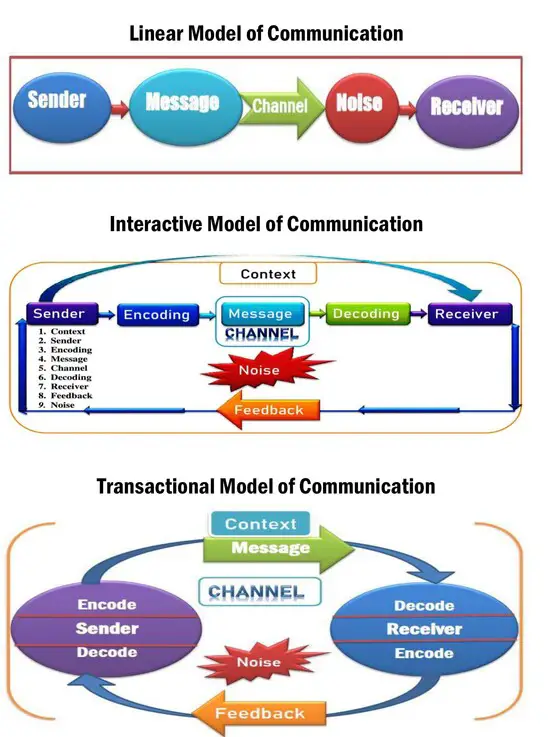
The linear communication model is a one-way interaction with no feedback. Linear is the primary communication model, whereas the transactional model is built on it. The sender communicates with the receiver without receiving feedback. It also represents a one-way communication process.

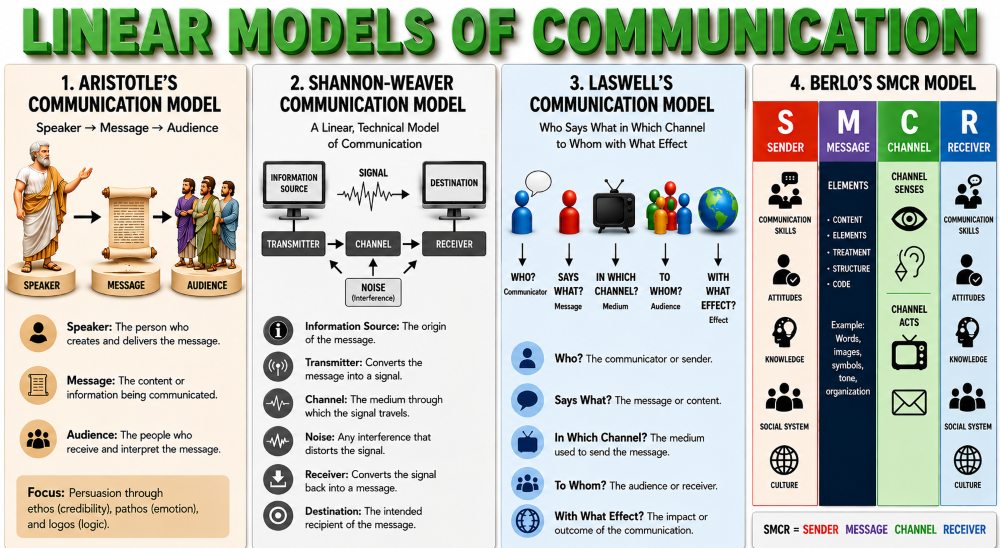
Many scholars have established linear communication models, such as Aristotle’s, Shannon and Weaver’s, Lasswell’s, and Berlo’s SMCR Model of Communication.

Linear Model of Communication Example

Communication Models Year
Aristotle’s Model of Communication. 300BC
Lasswell’s Model of Communication. 1948
Shannon-Weaver Model of Communication. 1949
Also, Berlo’s SMCR Model of Communication. 1960

linear models of communication in the 3 types of communication models
1. Aristotle’s Model of Communication: Linear

Aristotle’s communication model comprises the elements of speaker, speech, occasion, audience, and effect. In 300 BC, Aristotle developed a linear communication model that focused mainly on the speaker and the message. Controversially, it is also known as the first linear communication model. Aristotle’s communication model comprises five primary communication elements: speaker, speech, occasion, audience, and Effect. The speaker plays a crucial role in communication because they set the message to deliver. However, the speaker’s speech may depend on the occasion.
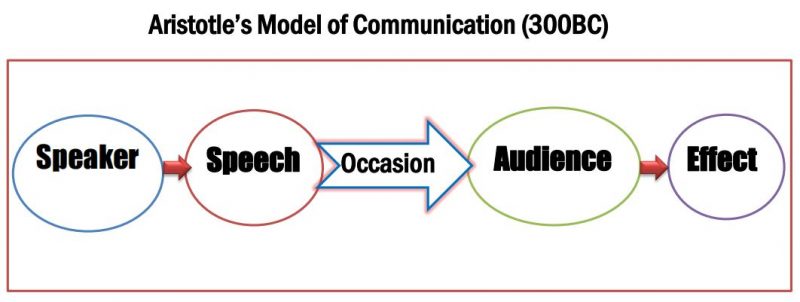
aristotle's linear model in the 3 types of communication models
Aristotle’s Linear Model
2. Lasswell’s Model of Communication: Linear

Political scientist and professor Harold Lasswell introduced Lasswell’s communication model in 1948. It is a linear model of communication that also represents a one-way style of communication or interaction. Lasswell’s model explains the communication process by answering the following questions: who says what, in which channel to whom, and with what effect?

For example, the BBC News channel has reported on the negative impact of social media on the spread of fake and misleading information. It also shows how social media can affect people physically and mentally. Finally, they offer tips for stopping the spread of fake news and disinformation on social media.
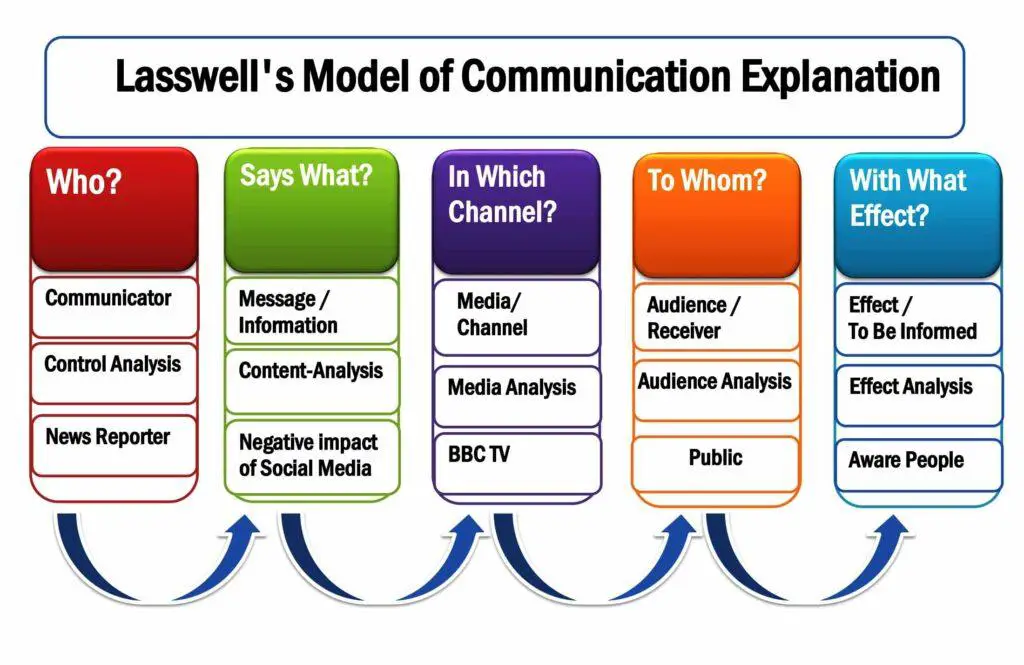
lasswell's linear communication theory  in the 3 types of communication models

3. Shannon and Weaver’s Model of Communication: Linear

Shannon-Weaver’s communication model was established by two American scholars, Shannon and Weaver, in 1949. The Shannon-Weaver model is called the mother of all communication models. Shannon and Weaver did not include feedback; therefore, their model is linear. However, Norbert Weiner added Feedback to the model in response to the criticism.

At first, this model was designed to articulate the technical communication process. Later, it was used to discuss all types of communication. The Shannon-Weaver model represents six essential communication elements: information source, transmitter, channel, receiver, destination, and noise source (Shannon, 1948). This model does not represent feedback; therefore, it is a linear communication model.

Shannon–Weaver Model of Communication Example
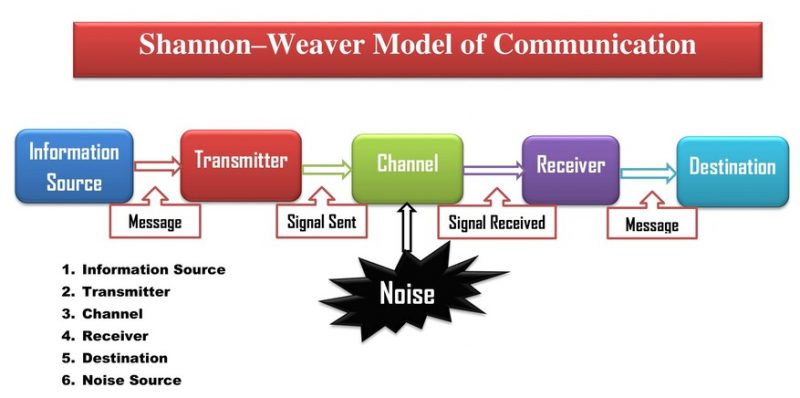
shannon and weaver model of communication-
Shannon and Weaver Model
4. Berlo’s Model of Communication: Linear

Berlo’s Model of Communication, also known as the SMCR model, includes the elements Source, Message, Channel, and Receiver. David Berlo developed the Source-Message-Channel-Receiver in 1960. It is also known as the David Berlo SMCR model of communication. However, Berlo invented this model based on the Shannon-Weaver communication model (1949). The four elements of David Berlo’s SMCR communication model are the source, message, channel, and receiver. Berlo focuses on both verbal and nonverbal communication elements to convey information.
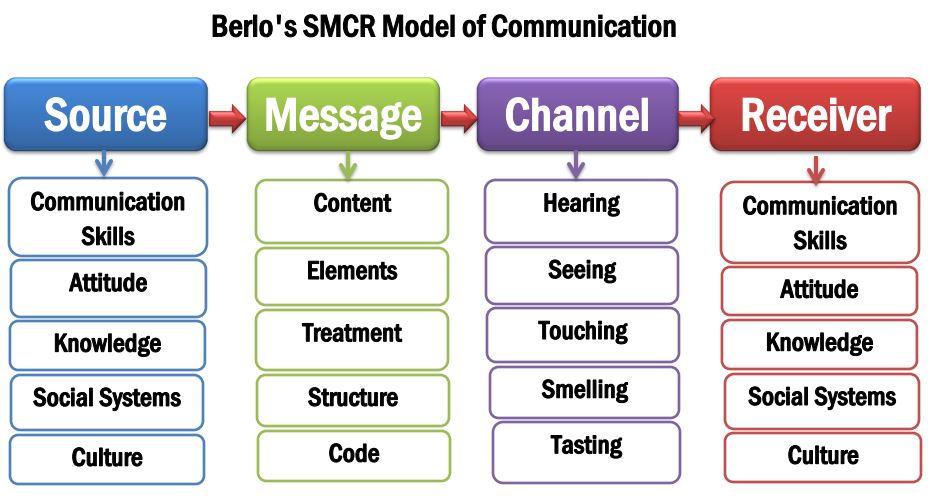
smcr model in communication

2. Interactive Models of Communication (Two-Way)

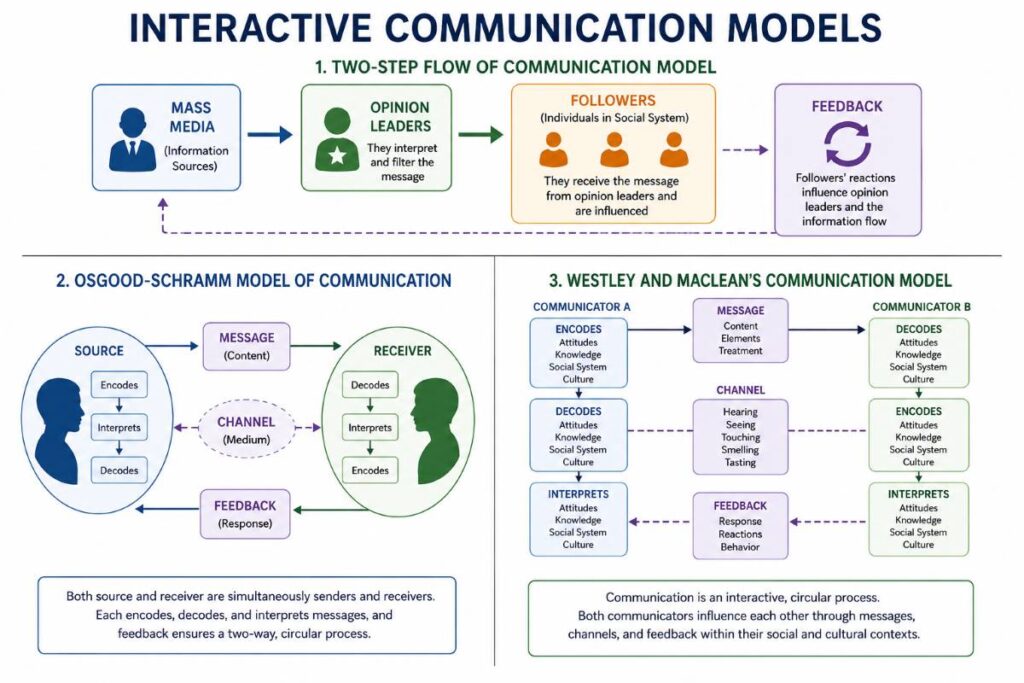
The interactive communication model refers to a two-way communication method with feedback. However, feedback is not simultaneous, resulting in slow, indirect feedback. Sometimes communication can be linear when the receivers do not reply to the senders. The interactive model of communication indicates mediated and internet-based communication.

For example, the two-step flow of communication, Osgood-Schramm, Westley, and Maclean are models of interactive communication.
interactive communication model

Interactive Model of Communication Example

Two-Step Flow of Communication Model 1944
Osgood-Schramm Model of Communication 1954
Westley and Maclean’s Model of Communication 1957
5. Two-Step Flow of Communication Model: Interactive

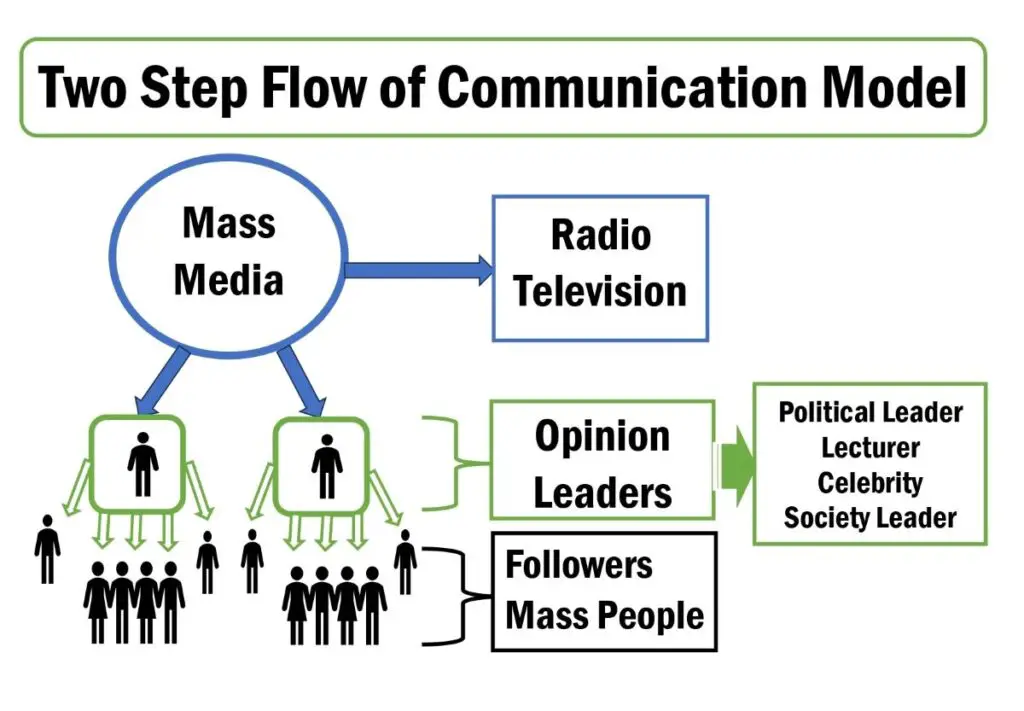
The two-step flow of communication is a well-known interactive model in the field of mass communication.  The three veteran scholars, Paul Lazarsfeld, Bernard Berelson, and Hazel Gaudet, developed the two-step flow of communication model in 1944. It is not a linear communication model; rather, the two-step flow theory is an interactive one. The media disseminate messages to opinion leaders, who serve as gatekeepers, conveying information to society and the community. There are multiple steps in this communication process; therefore, it is an interactive model. The feedback exists in multi-step conversations. 
two-step flow of communication theory

6. Osgood-Schramm Model: Interactive

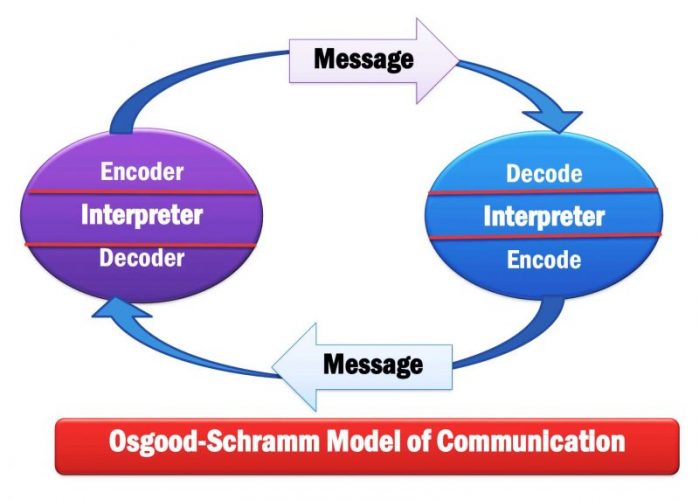
The Osgood-Schramm Model provides a two-way communication model. However, Wilbur Schramm adopted the concept from the theory of another scientist, Charles Egerton Osgood. Osgood proposed that the communication process is circular rather than linear. So, the person plays both the sender and receiver roles in the message. The person receives the message, interprets it, and then provides feedback. Therefore, it is known as the Osgood-Schramm Model of communication.

The elements of the Osgood-Schramm Model are the Message, the Encoder, the Decoder, and the Interpreter.
osgood-schramm model of communication
Osgood-Schramm Communication Model
7. Westley and Maclean Model: Interactive

Westley and Maclean’s interactive communication model examines the communication process between sender and receiver. Bruce Westley and Malcolm S. MacLean Jr. established the model in 1957. Westley and Maclean’s communication model was adapted from Newcomb’s communication and Lewin’s change management model. It represents the two-way communication process, so feedback is essential in this model. It also explains interpersonal and mass communication. Feedback is indirect and slow in mass communication, whereas it is direct and fast in interpersonal communication. According to Westley and Maclean’s model,  A represents the sender, B represents the receiver, and C represents mass media. The interactive communication process is more effective than linear communication.

westley and maclean model of communication

3. Transactional Models of Communication (Two-Way)

The transitional communication model appears to be a two-way process with immediate feedback. Simultaneous feedback is the essential component of the transitional models of communication. So, the communication process will not become transactional without feedback. The feedback is direct and very fast. The receiver is compelled to provide instant feedback. The significant difference between the interactive and transactional models lies in the provision of indirect and direct feedback.

For example, Wilbur Schramm’s model of communication, Barnlund’s transactional model of communication, Dance’s Helical model of communication, and Eugene White’s communication model are transitional models.

Transactional Model of Communication Example

Eugene White’s Model of Communication 1960
Dance’s Helical Model of Communication 1967
Also, Barnlund’s Transactional Model 1970
8. Eugene White’s Model: Transitional

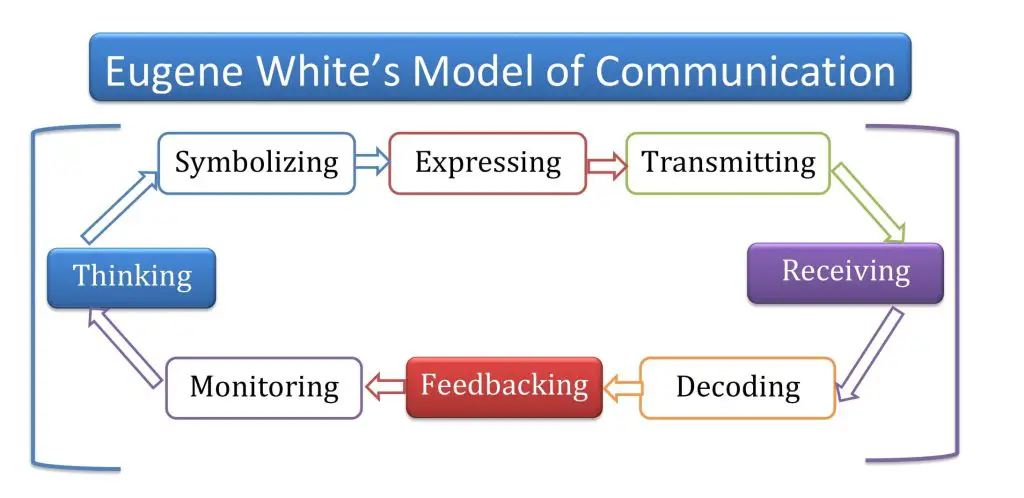
Eugene White’s communication model explains the eight stages of the oral communication process: thinking, symbolizing, expressing, transmitting, receiving, decoding, feedback, and monitoring (White, 1960). So, communication is a sequential interaction process; however, it cannot determine the receiver’s active role in ongoing communication.
eugene white’s model: transactional types of communication models

9. Dance’s Helical Model: Transitional

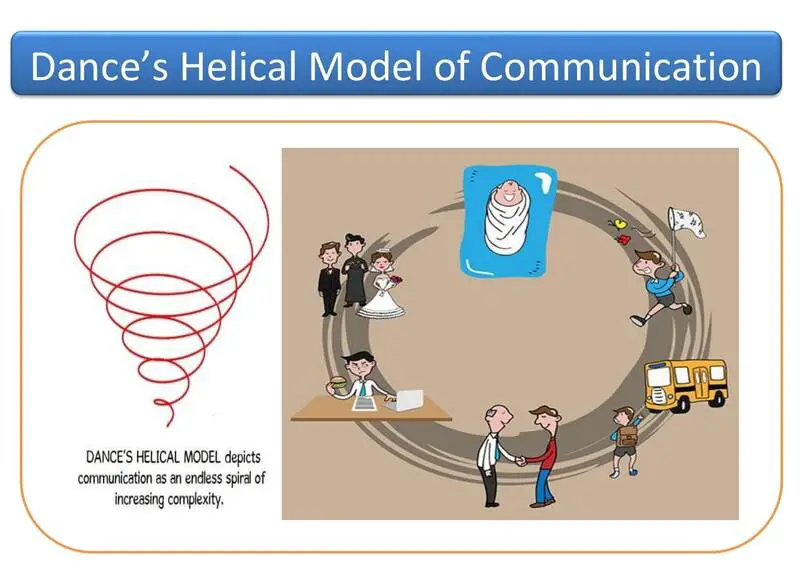
In 1967, Frank Dance introduced the transactional communication model called the Helical communication model. The author initially named the communication model “Dance’s Helix.” Frank Dance used the helix to develop the complex communication process model. The word helical comes from the helix, meaning a spiral staircase.  Communication is an evolutionary and dynamic process with feedback (Dance, 1967), and it becomes more extensive as it grows like a helix.
dance's helical transactional model in the 3 types of communication models

Any communication starts with a small circle, where the communicators share little about themselves. Communication expands boundaries when people share more personal information. Finally, the relationship grows gradually to reach the top level.

10. Barnlund’s Model: Transitional

In 1970, Dean Barnlund introduced the transactional communication model. The author formed this model based on public, private, and behavioral cues. Barnlund’s transactional model describes a multi-layered communication process with feedback. The sender and receiver exchange roles to facilitate effective communication; therefore, messages are exchanged reciprocally. The eight elements of Barnlund’s communication model are person, encoding, decoding, public cues, private cues, verbal cues, behavioral cues, nonverbal cues, and message.

 barnlund’s transactional model of communication-linear interactive and transactional model
Barnlund’s Transactional Communication Model

Key Comparison: Linear, Interactive, and Transactional Models

1. Linear Model: The linear communication model simplifies the process into a one-way flow from sender to receiver. Here, the sender encodes a message, which is then transmitted through a channel to the receiver, who decodes it. Feedback is minimal; it’s absent altogether, and there’s little room for interaction or dialogue. This model is akin to a broadcast, where information is sent with little expectation of a response or engagement.

2. Interactive Model: The interactive model introduces feedback and two-way interaction by expanding upon the linear model. It acknowledges that communication is a dynamic process involving encoding, decoding, and response from both parties. Feedback becomes essential for clarifying, validating, and adjusting messages. Communication is viewed as a reciprocal exchange that allows engagement and dialogue between the sender and receiver.

3. Transactional Model: The transactional model sees communication as a complex, ongoing process influenced by various factors. Here, communication is simultaneous, with both parties acting as sender and receiver. Messages are not merely transmitted but co-created through interaction and negotiation. Context, culture, and personal experiences shape the meaning of messages, which are subject to interpretation and reinterpretation from both parties’ perspectives.

Summary Table: Linear Interactive and Transactional Model

Feature / Metric Linear Model Interactive Model Transactional Model
Direction of Flow One-way transmission Two-way alternate flow Continuous simultaneous loop
Role of Feedback Completely absent Delayed or sequential Instantaneous & non-verbal
Concept of Noise Psychological/Physical interference Alternating barriers Constant background field
Core Example A radio broadcast or news alert An email thread or text conversation A face-to-face team meeting

Importance of the 3 Types of Communication Models

Communication models explain the elements of the communication process, for example, context, sender, receiver, encoding, decoding, channel, message, feedback, and noise. These are the components of communication that describe the entire process.

However, some communication models lack all these elements or features. For example, the linear model of communication lacks feedback. The communication model also explains the factors that prevent effective communication, known as barriers or noise; these hinder effective communication processes.

Communication models are essential tools for understanding communication processes. It provides detailed information on the communication process and illustrates its flow. Therefore, they have a tremendous positive impact on research by introducing numerous conceptual frameworks for communication processes.

Additionally, the model presents the elements of the communication process. Furthermore, the communication model provides tips for effective communication. They represent the barrier or noise that obstructs the communication process. They also explain the complexities of the communication system. Finally, these three communication models propose ways to improve the communication process to avoid conflict.

FAQ (Frequently Asked Questions): 3 Types of Communication Models

Q1: What are examples of linear communication models?

A: The four linear communication models are: Aristotle’s Model, Lasswell’s Model, Shannon–Weaver’s Model, and Berlo’s Model of Communication.

Q2: What are examples of Interactive communication models?

A: The three most common interactive models are: Two-Step Flow, Osgood-Schramm, and Westley and Maclean’s Model of Communication. 

Q3: What is the transactional model of communication?

A: The three famous transactional models of communication are: Barnlund’s Model,  Eugene White’s Model, and Dance’s Helical Model of Communication.

Q4: What are the three types of communication models?

A: The 3 types of communication models are linear, interactive, and transactional.

Q5: What are examples of linear, interactive, and transactional communication models?

A: The most common linear interactive and transactional communication models are: Aristotle’s Model, Shannon-Weaver Model, Lasswell’s Model, Berlo’s SMCR Model, Osgood-Schramm Model, Westley and Maclean’s Model, Wilbur Schramm model, Barnlund’s Transactional Model, Dance’s Helical Model, and Eugene White’s Model of Communication.

Q6: Which element differentiates the linear and transactional models?

A: Feedback is the crucial element that differentiates the linear and transactional models of communication. 

Reference List (APA 7th Edition): 3 Types of Communication Models

Dance, F. E. (1967). A helical model of communication. Human communication theory, 294-298.

Shannon, C. E. (1948). A mathematical theory of communication. The Bell System Technical Journal, 27(3), 379–423. https://doi.org/10.1002/j.1538-7305.1948.tb01338.x

White, E. E. (1960). Practical public speaking. Macmillan.

VALS Segmentation Model in Consumer Behaviour

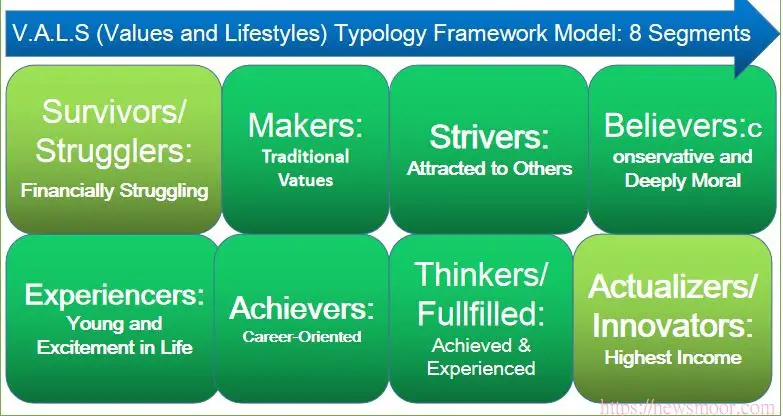
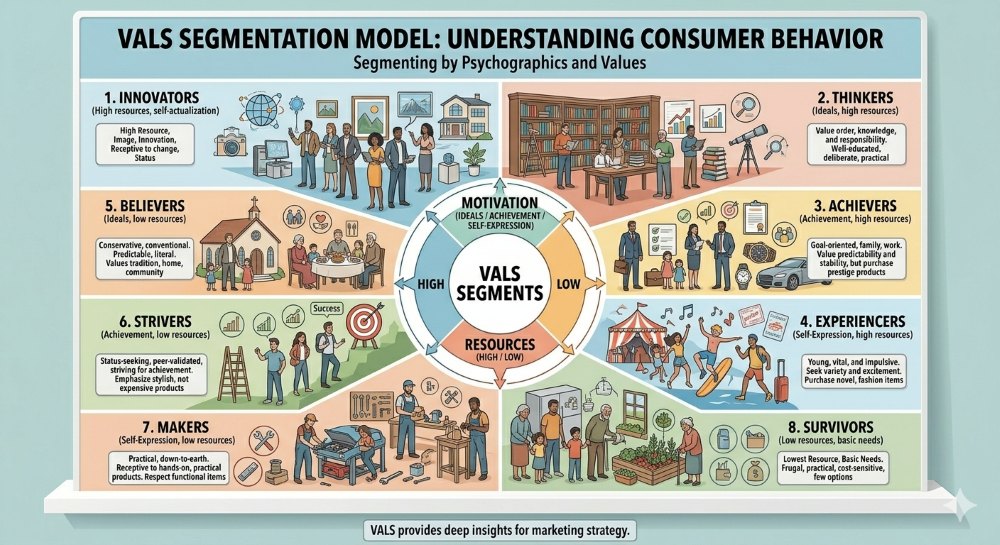
VALS Model in Consumer Behavior Examples. The eight elements of the VALS Segmentation Model are survivors, makers, strivers, believers, experiencers, achievers, thinkers, and innovators.

VALS Model

The VALS Model categorizes people into eight groups based on their lifestyles, psychological characteristics, and consumption patterns. It is also known as the Vals framework of psychographic segmentation, which segments people for marketing purposes. It is the most crucial framework for understanding clients’ values and lifestyles. Therefore, it is called the Vals audience segmentation model in consumer behavior. The VALS is the acronym for Values, Attitudes, Lifestyles, and psychographic factors.

VALS-2 is the extended model that renames strugglers as survivors, actualizers as innovators, and fulfilled as thinkers.

However, demographic and geographic psychographic segmentation is the most significant market segmentation technique for dividing people into homogeneous subgroups.

In 1978, the research institute Stanford established Maslow’s hierarchy of needs to develop a VALS (Values and Lifestyles) typology to categorize American consumers. In 1989, they created a quietly modified system that takes into account individuals’ lifestyles, psychological characteristics, and consumption patterns.

The difference between the VALS and the VALS-2 Model

The VALS model includes the following eight elements: Survivors, Makers, Believers, Achievers, Strivers, Experience, Thinkers, and  Innovators. 

Similarly, the VALS 2 Model divides people into eight categories: Strugglers, Strivers, Makers, Believers, Achievers, Experience, Fulfilled, and Actualizers.

VALS Framework Components

Eight Segments of the VALS  Model are:
  1. Survivors
  2. Makers
  3. Strivers
  4. Believers
  5. Experiencers
  6. Achievers
  7. Thinkers
  8. Innovators

vals segmentation model in consumer behaviour- vals 2 model
Figure 1: VALS Segmentation Model in Consumer Behavior

1. Survivors/ Strugglers

Firstly, Survivors or strugglers are financially needy people. In contrast to innovators, they are low-skilled, educated, without strong social bonds, and passive. They avoid risk because of feeling powerless. It seems their primary motive is to meet safety and security requirements.

For example, students are survivors because they are financially needy and powerless.

2. Makers

Makers are practical people with strong traditional values, constructive skills, self-sufficiency, and enough income. They live within a conventional context of family, practical work, and physical recreation. Makers are suspicious of new ideas, politically conservative, and respectful of government authority but resentful of government intrusion on individual rights.

For example, religious leaders uphold traditional values and operate within society’s conventional context.

3. Strivers

Strivers are attracted to others who exhibit qualities they don’t have but admire. They inquire about motivation and self-definition. They expect to achieve goals through wealth and often feel that life has dealt them a bad hand because of their lower income. Strivers feel easily bored because they are very impulsive.

For example, an unemployed person is looking for a job after completing graduation. Therefore, job seekers are real-life examples of strivers.

4. Believers

Believers share a very conservative, profoundly moral mentality with makers. They seem like makers because of their conservative, traditional values. They follow established routines organized by the family, social groups, and religious organizations. Their income, education, and energy are enough to meet demands.

For example, a retired government employee. The former person is an example of a believer.

5. Experiencers

Experiencers are young, energetic, enthusiastic, impulsive, and rebellious. They seek a variety of excitements but are politically uncommitted and highly ambivalent about their beliefs. They like being associated with outdoor, sports, recreational, and social activities.

For example, a teenager is an experience in the Vals segmentation model.

6. Achievers

Actually, achievers are work-oriented, successful people. They like to feel in control of their lives. They are also deeply committed to their work and to keeping promises to family, society, and their career. Achievers respect authority because they prefer to keep their promises, but are politically conservative.

For example, an employed person is an achiever. The CEO of the company, an artist, a political leader, and a businessman, is an example of an achiever in the Vals segmentation model.

7. Thinkers/ Fulfilled

Thinkers are mature, well-educated, professional adults with satisfying incomes. They stay current with international and national events and often deepen their knowledge. They are usually calm and self-assured because they depend on their decisions.

For example, a successful businessman is a thinker in the Vals segmentation model.

8. Innovators/ Actualizers

Finally, Innovators are highly successful people with self-esteem and considerable resources compared to strugglers. Innovators are supervised by both their principal and the dreams around them. They want to be government and business leaders because they have enormous power and a strong social conscience.

For example, a political leader is an innovator who can change society with power. Therefore, a political leader is an example of an innovator in the Vals segmentation model.

vals segmentation model

Conclusion

The Eight Categories of the VALS Segmentation Model are survivors, makers, strivers, believers, experiencers, achievers, thinkers, and innovators. The VALS Framework has become a crucial tool for targeting audiences in political campaigns and product marketing. Many organizations conduct digital marketing campaigns on social media platforms such as Facebook, Instagram, Twitter, and YouTube.